Breast Cancer Awareness Month: When a parent’s diagnosis changes childhood - cleveland.com
cleveland.com - written by Kaylee Remington.
Published October 7, 2026.
Four years later, Cindy Harris still remembers the question.
Her oldest son, Lucius, had just come home from school after Harris spent the day undergoing mammograms, ultrasounds and biopsies that ended with a breast cancer diagnosis.
The then-6-year-old looked at his mother and asked a question no parent wants to hear:
“Mom, are you gonna die?”
“That was probably one of the worst days of my life,” Harris said.
For Harris, the diagnosis marked the beginning of years of chemotherapy, radiation, surgery and ongoing treatment.
Harris said one of her greatest challenges wasn’t physical. It was helping her children understand what was happening.
Breast Cancer Awareness Month is widely recognized throughout the month of October.
Breast cancer is the most common cancer diagnosed in women, aside from skin cancers, and accounts for about one-third of all new cancer diagnoses among women each year.
The American Cancer Society estimates about 321,910 women in the U.S. will be diagnosed with invasive breast cancer in 2026, while approximately 42,140 women will die from the disease. The organization also estimates that about 1 in 8 women will develop breast cancer during their lifetime.
While much of the public conversation surrounding breast cancer focuses on screening, treatment and survival, experts say families often face their own emotional challenges alongside the diagnosis.
For Harris, that reality became clear almost immediately when she was diagnosed in 2022.
At the time, her sons Lucius and Liam were 6 and 4, respectively. They were old enough to recognize something was wrong, but young enough to struggle with what it all meant.
Harris’ diagnosis was not the first time her family had been confronted by serious illness.
In 2018, her niece was diagnosed with leukemia at age 3. Later that same year, Harris’ aunt was diagnosed with breast cancer.
About six months later, Harris’ mother was diagnosed with stage 4 cervical cancer and nearly died after complications left her hospitalized for weeks.
Then came Harris’s own breast cancer diagnosis.
Not long afterward, the same aunt who had battled breast cancer died after developing leukemia before she could begin treatment.
Today, Harris continues receiving long-term treatment while also helping care for her mother, whose cervical cancer recently recurred.
Although Harris and her husband chose to be honest with their children about her diagnosis, some fears remained hidden.
Months after she began treatment, Liam finally revealed he had been worried he could catch cancer from his mother.
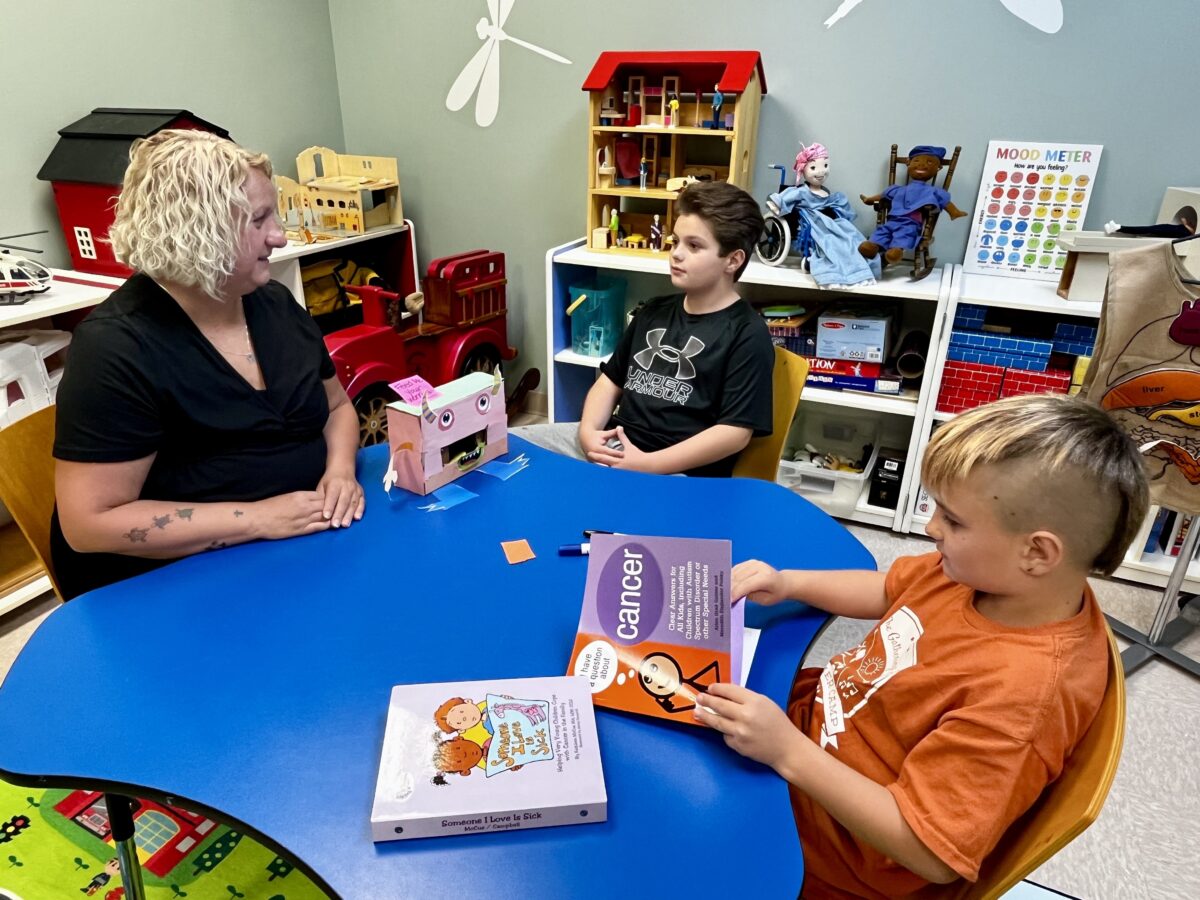
It’s a common concern among children dealing with a loved one’s diagnosis, according to Erin VanDorsten, child and family clinical program lead at The Gathering Place, a Northeast Ohio nonprofit that provides free support services, one-on-one support, support groups and programs for individuals and families affected by cancer.
“We see a wide range of emotional reactions from kids when their parents are diagnosed with cancer. A lot of the underlying theme of what we’re seeing, though, is our emotions are impacted by a lack of knowledge and understanding,” she said. “So, the greatest fear we see is uncertainty around, ‘what does that mean?’”
Children often worry about questions adults may not realize they are carrying.
“Did I cause it? Can I catch it? And who will care for me? So if there’s anything I want our families to fall back on, it’s addressing those things,” VanDorsten said.
Those worries can surface in different ways depending on a child’s age and personality.
Lucius’s response came about a year into his mother’s treatment.
The outgoing child suddenly developed severe separation anxiety, became fearful of attending school and didn’t want to leave his mother’s side.
VanDorsten said those kinds of reactions are not unusual.
“If we’re not telling them (what’s going on), they’re going to fill it up on their own, and oftentimes that’s wrong information or it’s scarier than the truth,” she said.
Children may not always have the vocabulary to express fear, anxiety or grief, she said, causing those emotions to emerge through behaviors instead.
While adults often focus on scans, treatment plans and survival rates, children tend to focus on changes to their daily lives.
A parent may no longer be able to attend activities, help with homework or participate in family routines.
For Harris, treatment brought enormous physical challenges. She underwent chemotherapy, radiation, a double mastectomy and additional therapies. There were periods when she was hospitalized and too sick to do much beyond rest.
But she said the emotional impact on the family was often just as difficult.
According to VanDorsten, children benefit from structure, honest communication and opportunities to spend time with peers who understand what they are experiencing.
Just as importantly, children still need opportunities to laugh, play, make friends and pursue interests unrelated to cancer, she said.
Four years after her diagnosis, Harris said cancer remains a part of daily life.
She continues treatment. Her mother continues treatment. Some days are better than others. But she hopes those realities don’t become the defining memories of her sons’ childhood.
Instead, Harris hopes they remember family traditions, sports, friendships and the activities they enjoyed along the way.
She said opportunities for normalcy can make a meaningful difference for children navigating a parent’s cancer diagnosis.
She pointed to Liam’s experiences attending camps through The Gathering Place, where he spent time outdoors, participated in activities with other children and was able to focus on being a kid rather than on his mother’s illness.
A diagnosis may alter childhood, but it doesn’t have to define it, VanDorsten added.
“You do not have to be defined by this,” she said. “Don’t have to be the kid whose mom has cancer. You can just be Liam, and that’s powerful and exciting.”
Click HERE to read the article on cleveland.com.